

When the Room Gets Quiet, Use That Moment.
I love being underestimated. Being quiet is a strategy: I listen, observe, and wait for the right moment to speak with the right tone. It’s what I learn as a martial artist: studying my opponent, reading the room and trusting my coaches to get better. And that’s the foundation of Conscious Conversations®.
The Conversation Most Leaders Are Avoiding
Not using the right word and tone can cost a client, a team member, or your seat at the table. Unfortunately, a lot of leaders in high-stakes communication freeze, over-explain, or default to professionalism as a shield.
As a Certified Executive Coach, ICF PCC, with a Bachelor’s in Cognitive Sciences from UC Irvine and a Master’s in Leadership and Management from the University of La Verne, I’ve studied why this happens. And as the creator of Conscious Conversations®, I’ve built the framework to fix it.
What High-Stakes Communication Actually Is
| Type | What It Includes | What Gets Missed |
|---|---|---|
| Verbal communication | Spoken words, tone, pacing | Filler words that signal uncertainty |
| Nonverbal communication | Facial expressions, body language | Signals that contradict what you're saying |
| Interpersonal communication | Verbal and nonverbal together | The gap between what's said and what's felt |
Every type of communication including how you walk into a room is data.
Decision makers read all of it, and so do I.
Just like an athlete who studies game film, do the same in your meetings. Notice how your colleagues and leaders react: humans are repetitive. Study their patterns, then prepare for each conversation like a play. That’s not manipulation. That’s strategy.
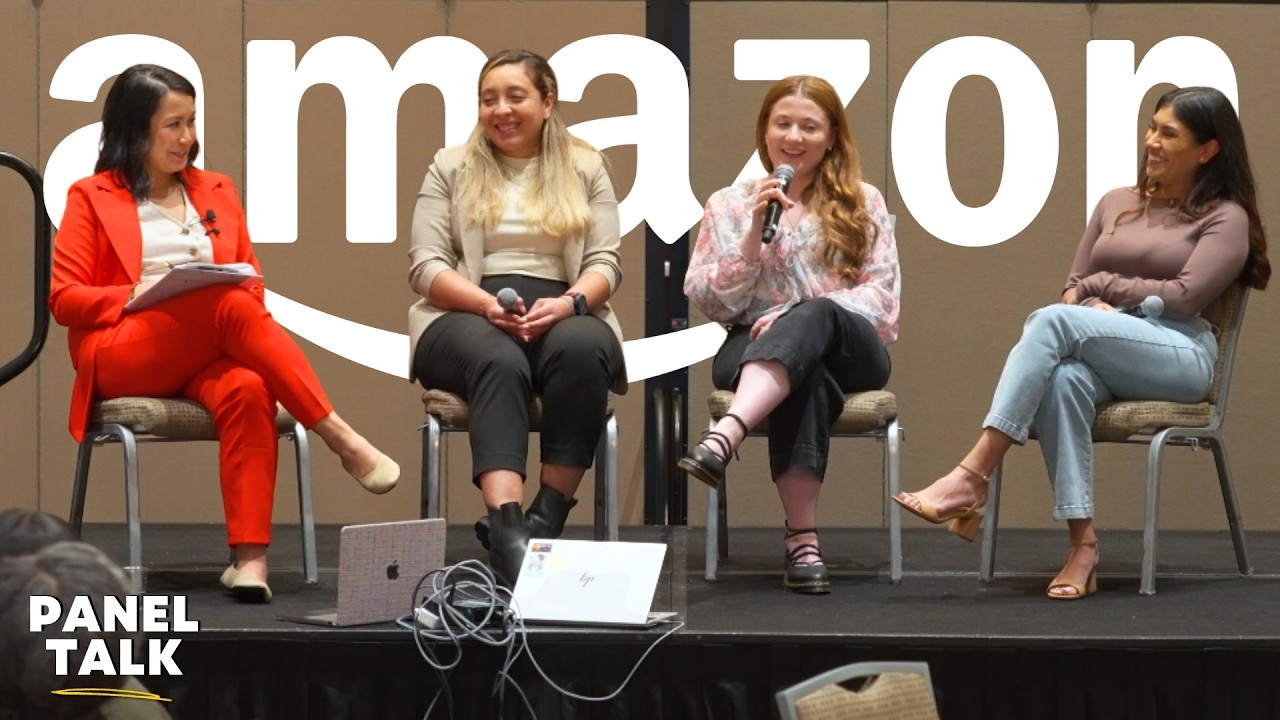
The Amazon Stage Moment
At an Amazon leadership conference, a scheduled speaker was running late. The organizers turned to me on the spot, “Can you go on stage?”
Instead of filling time, I asked one question to the event organizers: “What would most benefit everyone here today?”
The answer was unanimous: how to get to the next level.
So I did what most facilitators wouldn’t; I invited senior leaders to share their perspectives and gave those new to leadership the floor to ask their real questions. The result? A live problem-solving conversation that transfer information in both directions: no slides, no script. Just conscious, high-stakes dialogue that moved people.
And guess what happened? I landed 4 new clients from that talk.
It was a helpful talk because I asked for feedback from the event organizers, just like an athlete asks for feedback.
The talk worked because I did what athletes do after every game, I asked for feedback from the organizers. That debrief is how you get better. Do the same.

How to Lead High-Stakes Conversations Right Now
- Before: Get clear on the one outcome you need. Not three. One.
- During: Read body language and facial expressions as closely as spoken words; the room tells you everything.
- After: Follow up with what was decided, not just what was discussed.
- Debrief: Like an athlete, debrief what happened
FAQs
What makes communication "high stakes"?
When the outcome affects trust, opportunity, or direction.
How do I stay grounded when pressure spikes?
Breathe. Slow your pace. Tension rushes. Do not yell.
Can nonverbal communication contradict my spoken words?
Every single time. Nonverbal is 80% of the communication
Ready to Communicate Like the Room Depends on It?
Schedule a call with me: elainelou.com/call
In the rooms that matter most preparation is the confidence.